


Katanya, sih, Katanya /
People Said, You Know, People Said
Illustration on clay, mural, fabric
2016
In a conversation, the sentence is often pronounced in a light tone and indicates that the news being discussed has not been confirmed of its truth. In social life; things like gossip, rumor, and slander are not only means of expanding information but also an informal form of social control. People said, you know, it also strengthens the relationship between community members. Truth and unconfirmed issues are interwoven in such a thin line. This unconsciously is rooted and circulated fairly around us.
If the information is spread on a national scale, the mass media will compete to report it in a way that expands its scope. Information, stories, and statements overlapping each other to add to the burden of a story. Sometimes in order to sell a hot issue, the news is added to the content of trivial issues that are scattered around it without deepening the content. Sometimes if the news is not presented and digested properly, one mistake can become another form of terrorism. Instead of being investigative; rumor journalism makes news more exciting, seasoned, and at the same time easy to forget.
The strategy of shifting issues is no longer a new thing in political games which are said to be part of the government’s early warning system. People said, you know, throwing out crisp issues and spreading them to the public is one of the intelligence’s duties to cover up another bigger issue. When mystical rumors were often used to influence political conditions, today religion is a hot ingredient. This is reinforced by the existence of social media which makes the distribution of information faster, wider, and difficult to trace its source. Quite often, for example, someone gets uncertain news that is interesting to share, passes the health benefits article that is said from the ’next-door group’, and shares important information that is sometimes true and sometimes it’s not.
How information is politicized often makes facts and opinions mixed up. If this conversation leads to an oral tradition which has an important role in passing down a culture from generation to generation and acts as a free time content, channeling attitudes, views and ideals of a group; even the stories that are being told are susceptible to possible changes in their distribution channels as well as the limited truths that are not necessarily universal. Some of the truths contained in stories also need to be examined again and again.
Of course, if we are not the first party to come into direct contact with it, it is difficult to get actual news according to the facts. Stories that are reduced, covered, added, and seasoned become things that seem natural. Sometimes, the truth contained in a fictional story can be more trusted to be accurate.
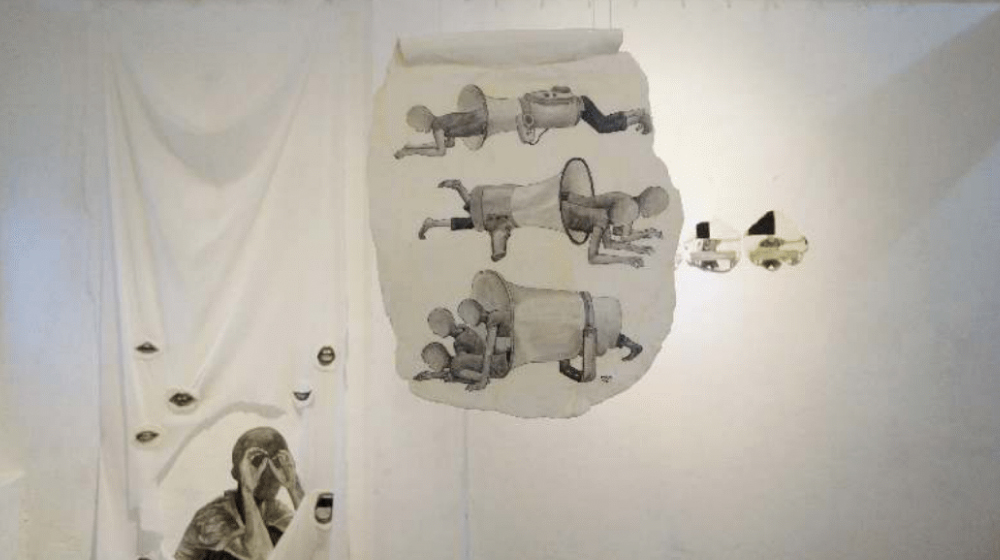
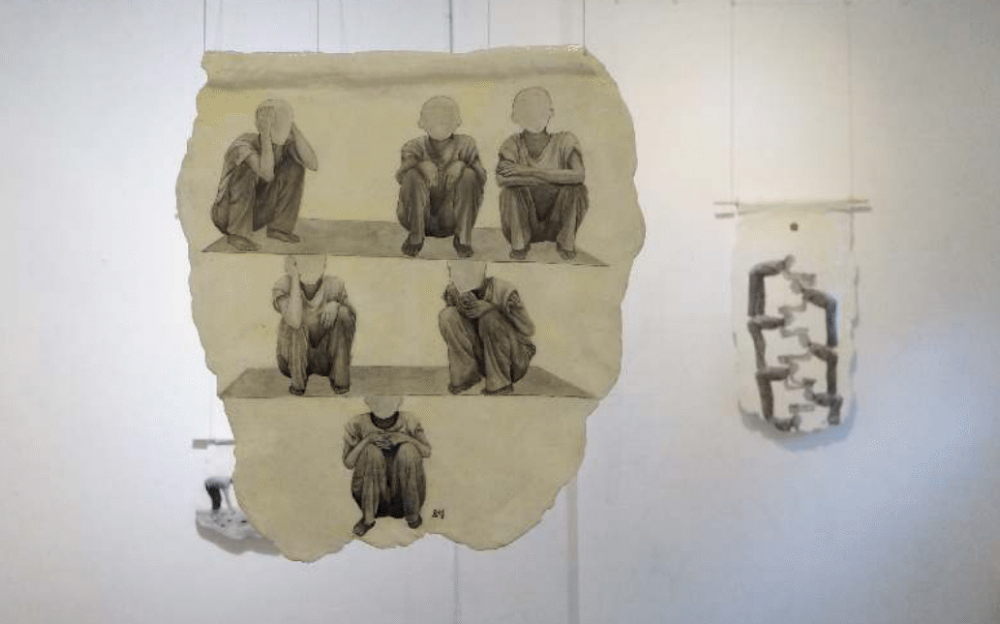
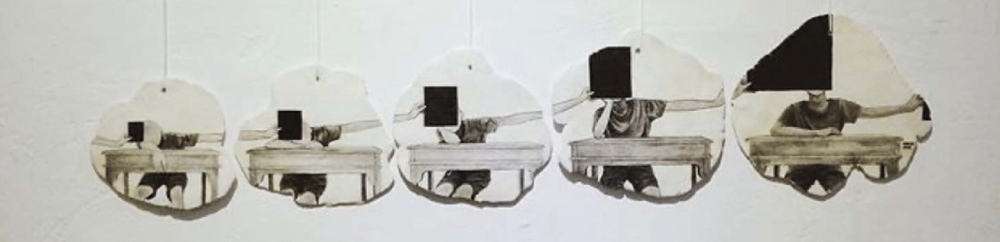
In this exhibition, Dian describes her anxiety over the distribution of information and rumors in paintings depicting human gestures interacting with each other; giving and receiving messages before then transmitting them again with increasing payload patterns.
This work uses clay as a media that describes the weight of the news content as well as its fragility. In the process of forming the clay, there is also a process of flattening the surface of the media and making it wider and broader, according to the nature of information that spreads and extends from one party to another, through one medium to another in an unexpected form until one day it will stop into one final form that is complete although it is without end and without conclusion.
Mira Asriningtyas
