


Our Place is Placeless, a Trace of The Traceless
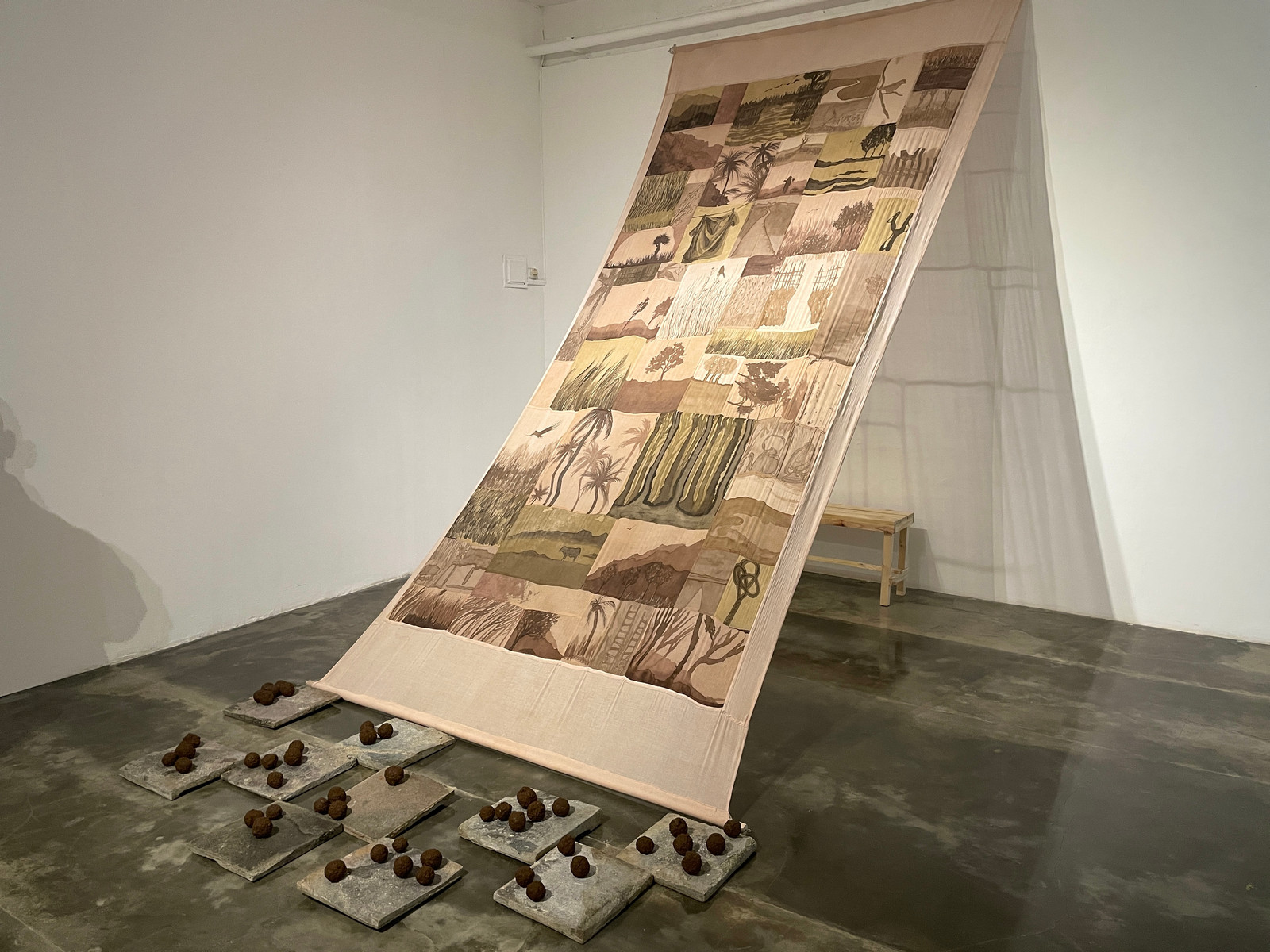
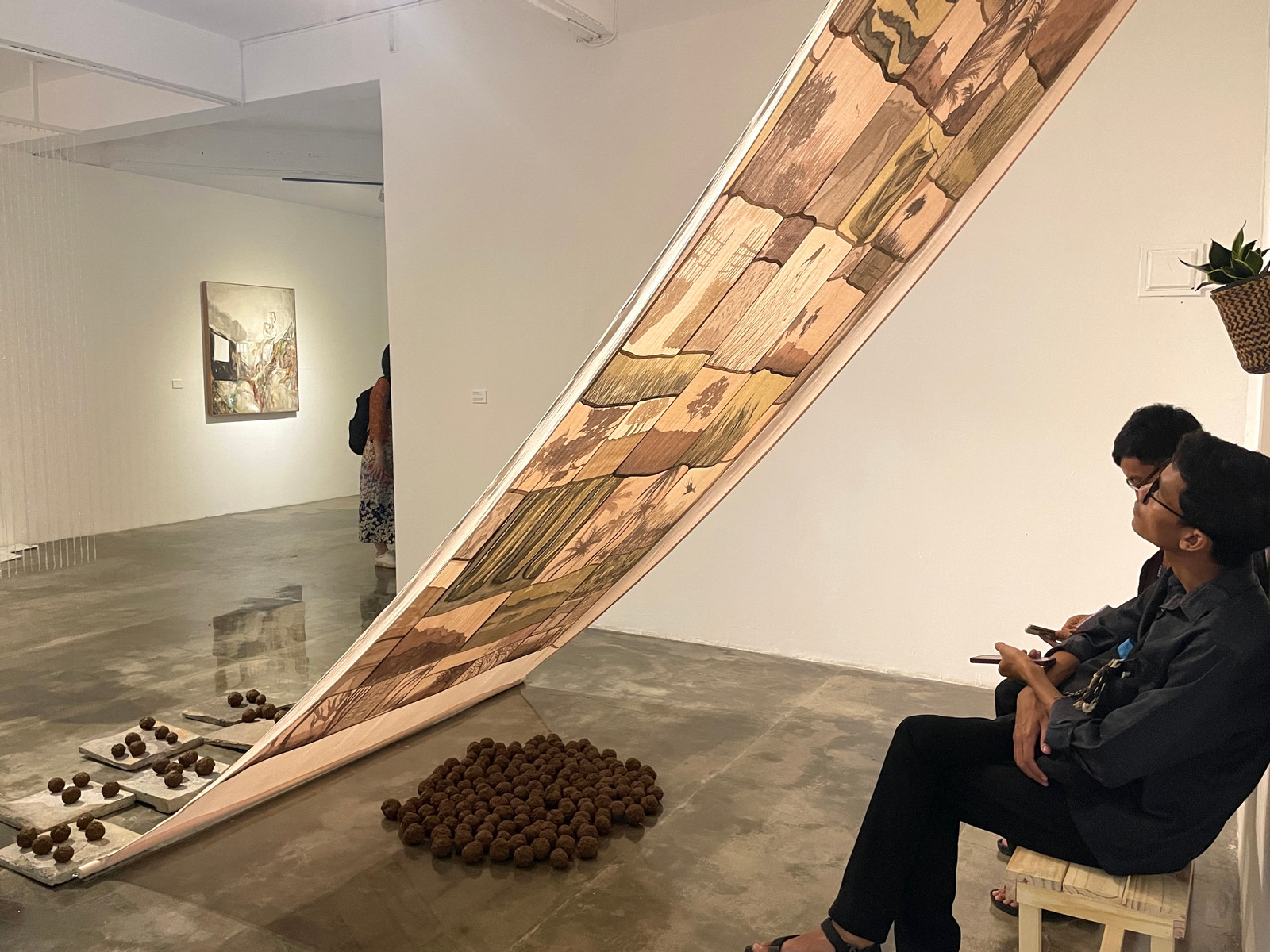
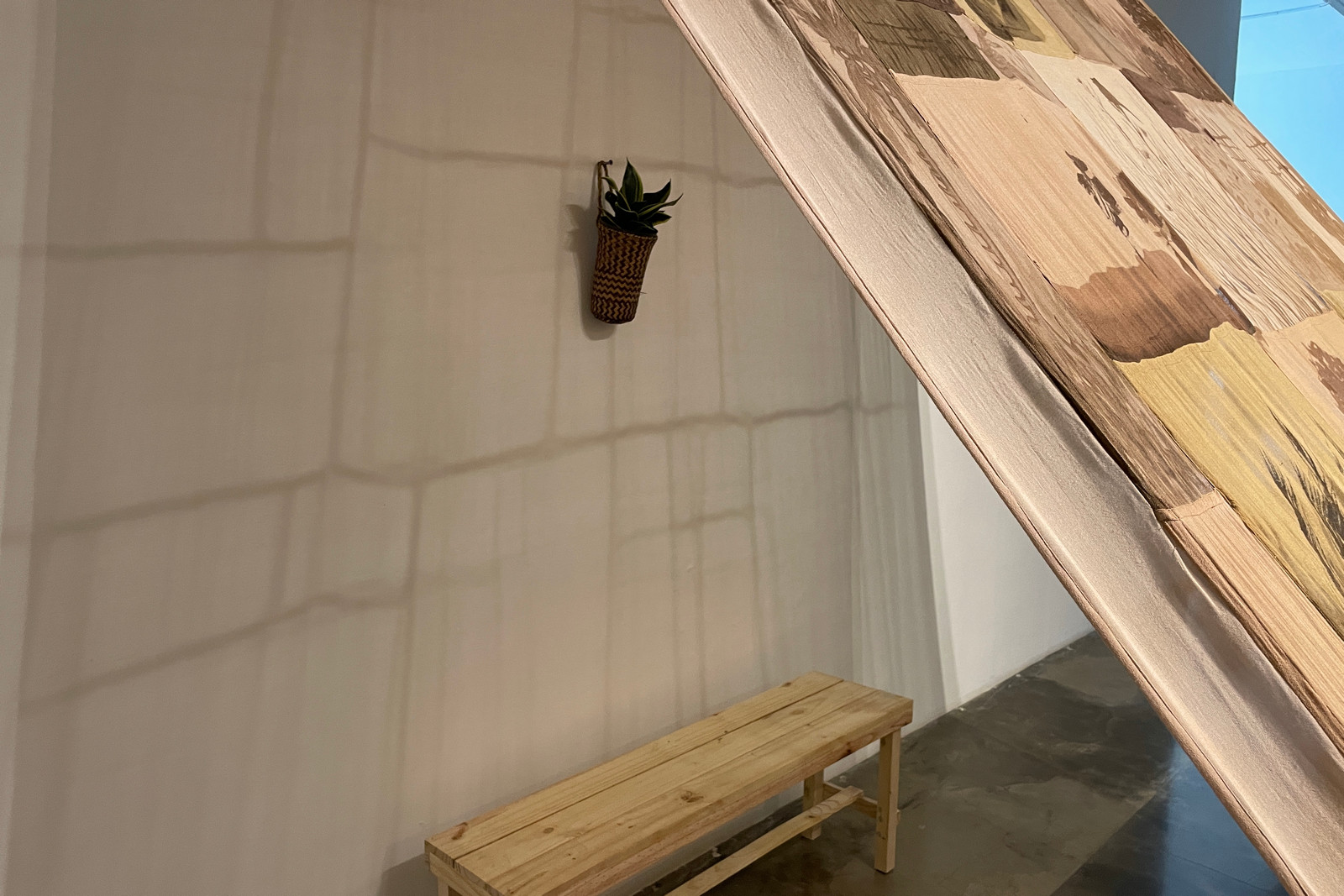
Mordant paste on fabric dyed with plant-based dyes from hedge plants, clumps of soil, cement tiles, wooden bench
2024
This work began with my morning running routine, which I later felt compelled to replace with walking. Slowing my pace allowed my body to come closer to and connect more attentively with the environment of my neighborhood, an urban kampung (urban village). I no longer experienced it as a mere object of observation, but as a living space; layered, complex, and deeply human. Formed by the migration from villages to cities, urban kampungs carry traces of agrarian life. Their residents still uphold values of sharing, seeking shelter, and facing hardship together. Among narrow alleys, tightly packed walls, and shared terraces, the kampung becomes a space of encounter, one that goes far beyond the basic function of a place to live.
In its form, this work borrows the gesture of shelter, as if one could find shade beneath its shadow. It offers a space for listening, tending to conversations, and calling forth memories of home. Village landscapes — often seen in rural areas — are painted on semi-transparent fabric, evoking the haziness of memory. Mordant marks dyed with pigment from hedge plants lead us into a collective memory of the village, not as romantic nostalgia, but as fragments of meaning that continue to grow amidst the city. In urban kampungs, within the tightly linked housing blocks and the narrow lanes that separate them, traces of the villagers’ rural origins remain: murals of village scenes, birds in cages, and plants arranged vertically along the walls of the alleyways.
Amidst ongoing shifts and displacements, this work attempts to serve as both a marker and a pause; a moment of reflection in an unfinished migration. The urban kampung is not merely a place of transit, but a living space that continuously negotiates identity, memory, and a sense of belonging to the land; as home, and as a place to stand.
