
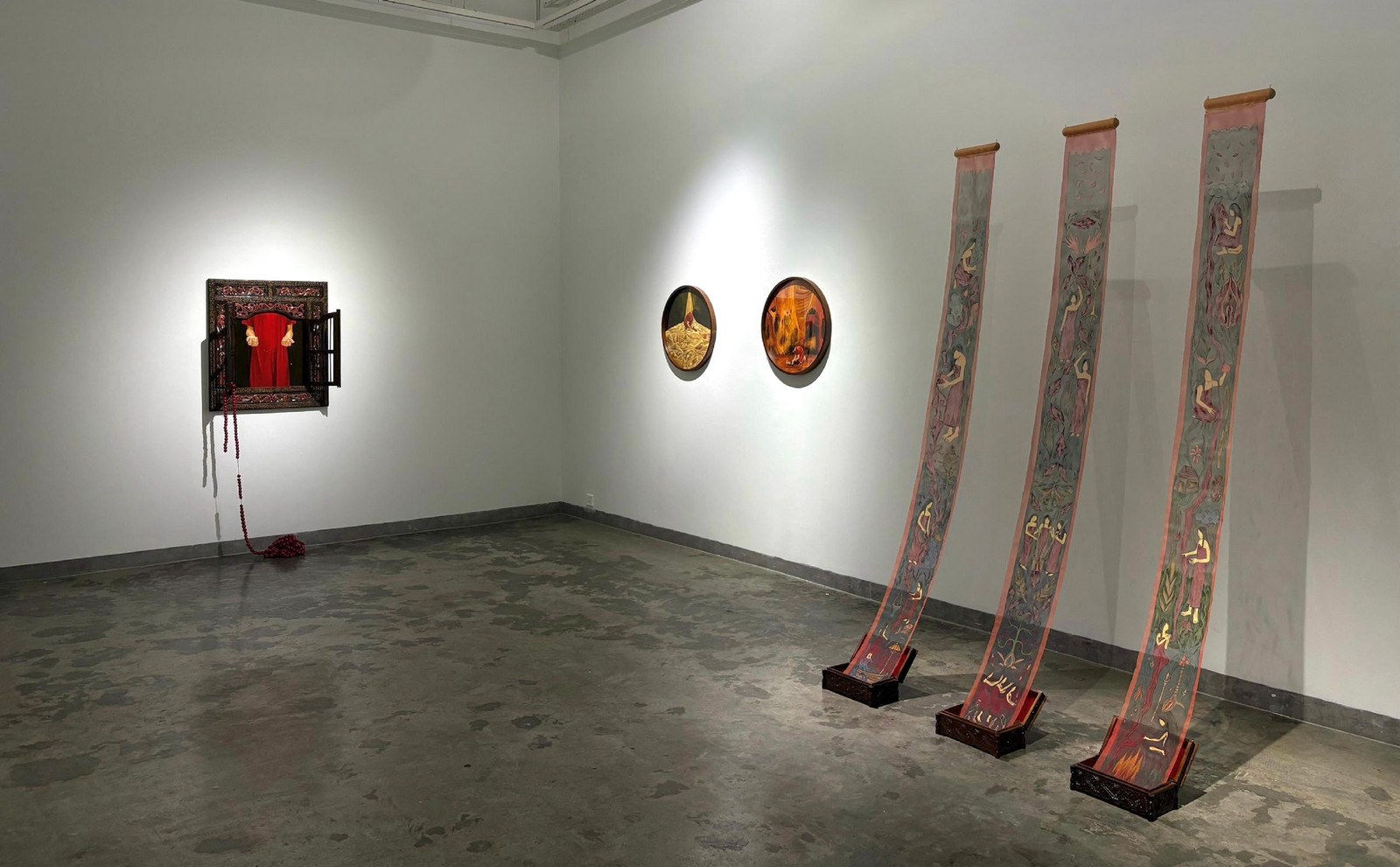


Nests of Memories That Shrink from Words
Acrylic on transparent fabrics, carved wooden chests
Fabric: 200 x 23 cm, Wooden Box: 29 x 16 x 13 cm
2025
An Invitation to the Unborn Song
Oil on canvas, carved wooden window, wooden beads
80×90 cm
The Message of the Immemorial Seed
Watercolor on paper
Diameter 60 cm
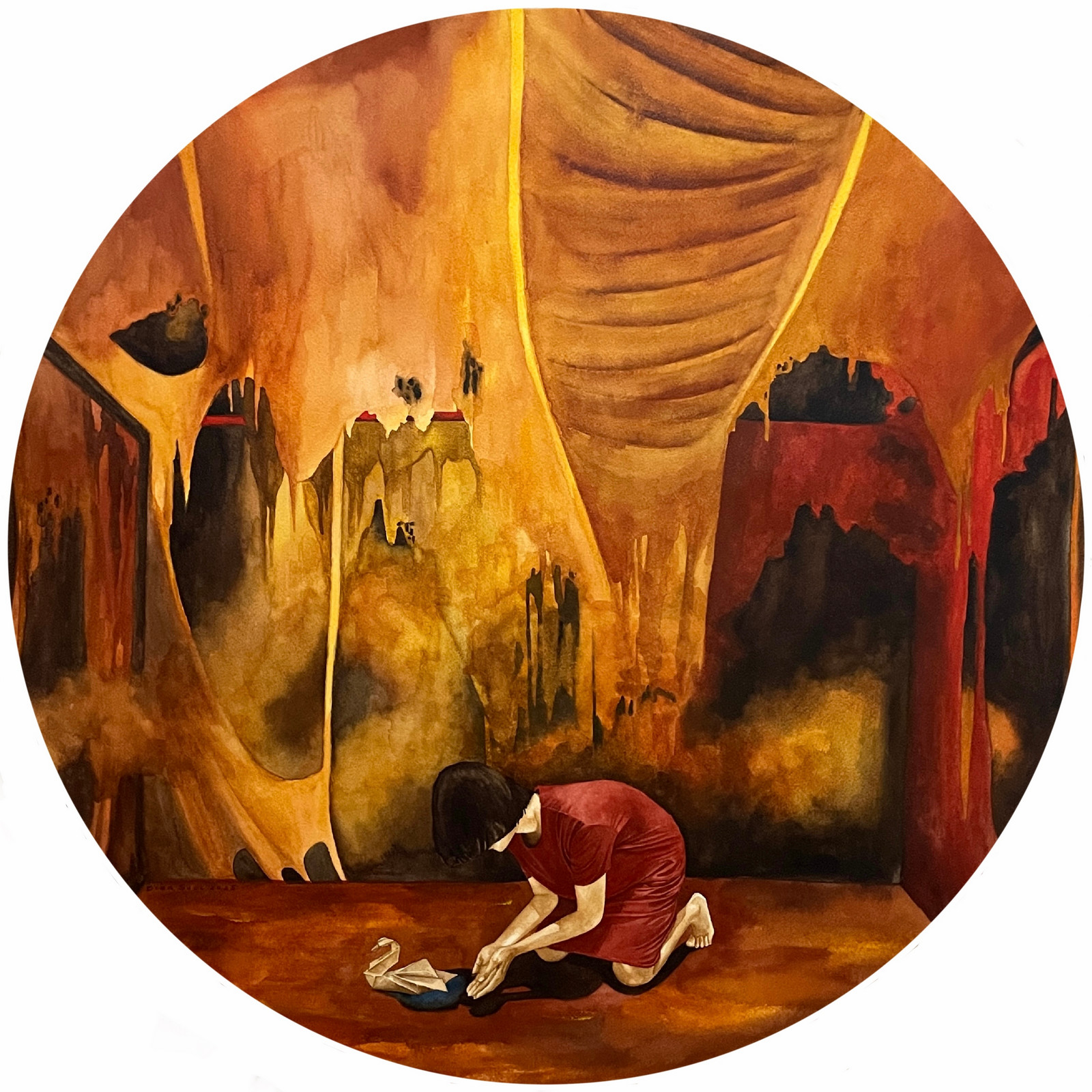
The Breeze That Hastens the Ship Across the Sea
Watercolor on paper
Diameter 60 cm
To imagine Jepara not only as a coastal town on the northern shore of Java, known for its wood carving, woven textiles, batik, and monel crafts, is to uncover the rich histories woven into the bodies and living spaces of its people. The city is more than just a center of exquisite craft production; it is also the birthplace of powerful and influential female narratives: Queen Shima, Queen Kalinyamat, and Princess Kartini. These three figures are not mere symbols of the past, but living embodiments of the enduring strength of Jepara’s women throughout history. During Queen Shima’s reign, stone carvings signified sovereignty. Under Queen Kalinyamat, Jepara became a bustling port city where trade, culture, and maritime power intersected, leading to a flourishing of wood carving. In Kartini’s era, as Jepara’s prominence declined, she elevated the beauty and importance of Jepara’s handcrafted works on the global stage.
In creating this work, the spiritual essence of these three women is intentionally invoked, drawing upon their strength to shape and guide the narrative. This work delves into how women nurture their skills as a form of spirituality, beyond formal rituals, ingrained in daily actions. The body serves as an unwritten repository, preserving knowledge, memories, and passing them down through generations.
Embodied knowledge is a priceless legacy, transmitted through movement, touch, and daily rituals. There is a spirituality rooted in unity, in household prayers, in rituals that honor craft as a form of devotion. Artisanal expertise is handed down from mothers to daughters, grandmothers to granddaughters a living archive present in every fingertip. And there is a political aspect, as women carve out space, negotiate within industries, and maintain control over their labor.
Jepara’s economic evolution has shifted women from home-based crafts to garment factories catering to global brands. Women’s manual skills are increasingly valued over men’s. This transition not only impacts domestic and labor dynamics but also alters how women relate to their histories and communities. This work aims to preserve, rekindle, and echo those vanishing stories, those elusive memories, that persist in the spiritual and physical layers of women’s lives.
